SkinEthic™ RHE Human Epidermis
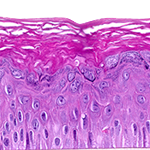
Normal human keratinocytes cultured at the air-liquid interface on an inert polycarbonate filter in a chemically defined medium — a reconstructed human epidermis.

World leader in tissue engineering.
EPISKIN, world leader in tissue engineering, offers Human Reconstructed Tissues to the global scientific community – academic and industry – to support research and development activities in Safety and Efficacy.


Normal human keratinocytes cultured at the air-liquid interface on an inert polycarbonate filter in a chemically defined medium — a reconstructed human epidermis.
Reconstructed skin with a dermal equivalent of human fibroblasts under a stratified, well-differentiated epidermis from normal human keratinocytes.
Immortalized human corneal epithelial cells reconstructing a corneal epithelial tissue at the air-liquid interface — used for the OECD TG492 eye irritation test.
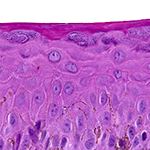
Keratinocytes co-cultured with melanocytes of phototypes II, IV and VI, forming 3D pigmented epidermal tissue for pigmentation studies.
Tissue Models
10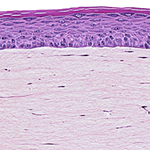 01
T-Skin
Browse catalog
 02
SkinEthic RHE
Browse catalog
 03
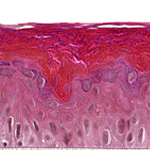
RHE-LC
Browse catalog
 04
RHPE (Pigmented Epidermis)
Browse catalog
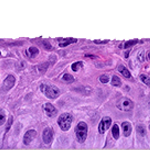 05
HCE (Corneal Epithelium)
Browse catalog
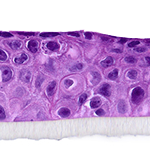 06
HO2E (Oesophageal Epithelium)
Browse catalog
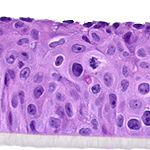 07
HOE (Oral Epithelium)
Browse catalog
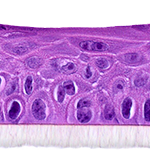 08
HGE (Gingival Epithelium)
Browse catalog
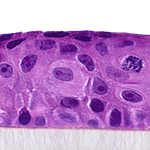 09
HBE (Bladder Epithelium)
Browse catalog
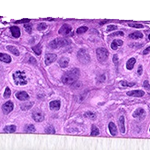 10
HVE (Vaginal Epithelium)
Browse catalog
Models & Applications
12We provide our worldwide clients reliable and relevant in vitro tools for safety and efficacy evaluation. Based on easy-to-use and validated protocols, EPISKIN tissue models allow industrial corporations to screen and measure with high precision, the irritation, penetration, metabolism, or efficacy of large number of formulations or actives.
EPISKIN Corporate Movie — Advanced 3D models for a better, more predictive and more ethical science
Our product lines include: reconstructed human epidermis; reconstructed human epidermis with melanocytes (different complexions are available from phototype II to VI); reconstructed human dermis and epidermis (Full Thickness Model); Reconstructed Human Corneal Epithelium; reconstructed human mucosa: Oral, Gingival and Vaginal Epithelium.
All of these models allow the evaluation of raw materials, active ingredients and finished products being either in a solid, liquid, powder, cream or gel form.
Industrialised Tissue Production
A unique cell culture process industrializes reconstructed human tissue production, delivering thousands of tissues every week.
Cosmetic, Pharma & Chemical Partners
EPISKIN partners with cosmetic, pharmaceutical and chemical industries for safety and efficacy testing.
Stringent Batch QC
Each tissue batch undergoes stringent quality control for viability, morphology, and barrier function, in compliance with OECD and regulatory standards.
Animal-Free Models
Developed from ethically sourced human keratinocytes and animal-free, eliminating the need for animal testing.
Eye Care, Cosmetic & Herbal Soaps, Skin Care, Hair Care & more

Scientific References
4 01
Demonstrating the principal mechanism of action of medical devices intended for vaginal use on reconstructed human vaginal epithelium: the case of two hyaluronic acid-containing devices
Read more
 02
Evaluation of Antimicrobial, Antiadhesive and Co-Aggregation Activity of a Multi-Strain Probiotic Composition against Different Urogenital Pathogens
Read more
 03
Use of reconstructed skin model to assess the photoprotection afforded by three sunscreen products having different SPF values against DNA lesions and cellular alterations
Read more
 04
Evaluation of Human Esophageal Epithelium Permeability in Presence of Different Formulations Containing Hyaluronic Acid and Chondroitin Sulphate
Read more
Skin irritation, corrosion, phototoxicity, and ocular irritation models.
Yes. Episkin models comply with OECD guidelines and are widely accepted for regulatory testing.
Standard lead time 4–5 weeks due to production and international shipping constraints.
Temperature-controlled express shipping with detailed handling instructions on arrival.
Each EPISKIN tissue batch undergoes stringent quality control for viability, morphology, and barrier function. This ensures consistent, reliable performance and full compliance with OECD and regulatory standards.
EPISKIN models are used in cosmetics, pharmaceuticals, chemicals, and academic research to evaluate skin irritation, corrosion, phototoxicity, genotoxicity, and compound penetration or efficacy.
Upon arrival, tissues must be stored at 37°C in a CO₂ incubator and used immediately according to the test protocol provided. They are shipped ready-to-use and should not be frozen.
No. EPISKIN models are developed from ethically sourced human keratinocytes and are animal-free, eliminating the need for animal testing or related ethical approvals.
Yes. EPISKIN offers customized models and testing solutions upon request, including pigmentation, atopic, and reconstructed ocular tissues tailored for specific study needs.


